
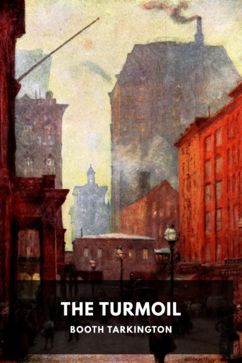
The Turmoil - Booth Tarkington
Booth Tarkington's The Turmoil drops us into a Midwestern city at the peak of the industrial age. It's loud, sooty, and growing at a breakneck pace. At the center of this whirlwind is Jim Sheridan, a man who embodies the era's relentless drive. He built his fortune from nothing and believes wholeheartedly in the gospel of business and expansion. For him, success is measured in smokestacks and dollar signs.
The Story
The real conflict isn't out in the streets—it's in Jim's own home. His son, Bibbs Sheridan, is a gentle soul recovering from a nervous breakdown. Bibbs sees the city's 'turmoil' not as progress, but as a kind of sickness. He finds beauty in books and quiet reflection, things his father views as useless. Jim is determined to harden Bibbs up and force him into the family business, believing it's the only path to being a real man. The story follows this painful push-and-pull, watching as Bibbs tries to navigate his father's overwhelming world and find his own place in it, all while the city around them strains under the weight of its own ambition.
Why You Should Read It
What blew me away was how current this all feels. Tarkington isn't just writing about factories; he's writing about a mindset. Jim Sheridan's 'growth at any cost' attitude will sound very familiar today. But the book's heart is in Bibbs. His struggle isn't lazy rebellion; it's a genuine search for meaning in a world that only values output. You feel for both of them, which makes their clashes so powerful. It's a brilliant, character-driven look at the American family and the different ways we define success.
Final Verdict
This book is perfect for anyone who loves a rich family saga or stories that explore the gap between generations. If you're interested in American history, it's a fascinating look at the dawn of the modern corporate age, not from a textbook, but from a living room where the arguments happen. Most of all, it's for readers who appreciate complex characters. You won't find simple heroes or villains here, just flawed, compelling people trying to figure life out—which is why a novel from 1915 can still ring so true.
This content is free to share and distribute. It serves as a testament to our shared literary heritage.




Mary Miller
10 months agoExactly what I was looking for, thanks!