
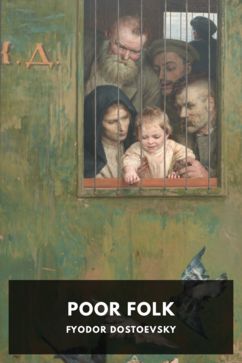
Poor Folk - Fyodor Dostoevsky
Before 'Crime and Punishment' and 'The Brothers Karamazov,' a young Fyodor Dostoevsky introduced the world to his genius with this, his first novel. 'Poor Folk' is an epistolary novel, meaning the whole story is told through letters. This format pulls you right into the characters' private thoughts in a way regular narration can't match.
The Story
The story is a back-and-forth of letters between two distant relatives: Makar Devushkin, a timid, poor copying clerk in his late forties, and Varvara Dobroselova, a young, orphaned woman who sews for a living. They live in separate, miserable rooms in St. Petersburg, and their correspondence is their lifeline. Makar, though desperately poor himself, sends Varvara what little money and gifts he can scrape together, trying to shield her from the harsh world and her predatory landlord. Varvara, in turn, worries about Makar's health and pride. The plot revolves around their daily struggles—a lost button, a gossipy neighbor, a degrading social visit—and the looming threat of Varvara being forced into a marriage she doesn't want for financial security. The tension isn't in car chases, but in whether a character can afford a new pair of boots without starving.
Why You Should Read It
This book grabs you by the heart. Dostoevsky has an incredible gift for showing how poverty isn't just about empty pockets; it's a state of mind. It's the burning shame Makar feels when his boss looks at his worn elbow. It's the way a simple gift of grapes becomes a monumental act of love and sacrifice. Their relationship is beautiful, tragic, and deeply human—it’s about two people clinging to their dignity and each other in a world designed to strip them of both. You'll laugh at Makar's awkward, rambling letters one moment and feel a physical ache for him the next. It’s a masterclass in character writing.
Final Verdict
This is the perfect starting point for anyone intimidated by Dostoevsky's later, denser works. It's short, focused, and emotionally direct. It's for readers who love character-driven stories, for anyone who's ever felt financially insecure or socially small, and for those who appreciate seeing where a literary giant took his first, brilliant steps. If you believe the best stories explore the universal human experience, 'Poor Folk' is essential reading.
No rights are reserved for this publication. It serves as a testament to our shared literary heritage.
Karen Rodriguez
11 months agoAfter a thorough walkthrough of the table of contents, the language used is precise without being overly academic or confusing. I am looking forward to the author's next publication.
William Garcia
9 months agoIt effectively synthesizes complex ideas into a coherent whole.
Emily Lopez
2 years agoI appreciate the objective tone and the evidence-based approach.
Matthew Jones
7 months agoHaving read the author's previous works, the attention to detail regarding the core terminology is flawless. It’s hard to find this much value in a single source these days.






James Lopez
11 months agoThe author provides a very nuanced critique of current methodologies.